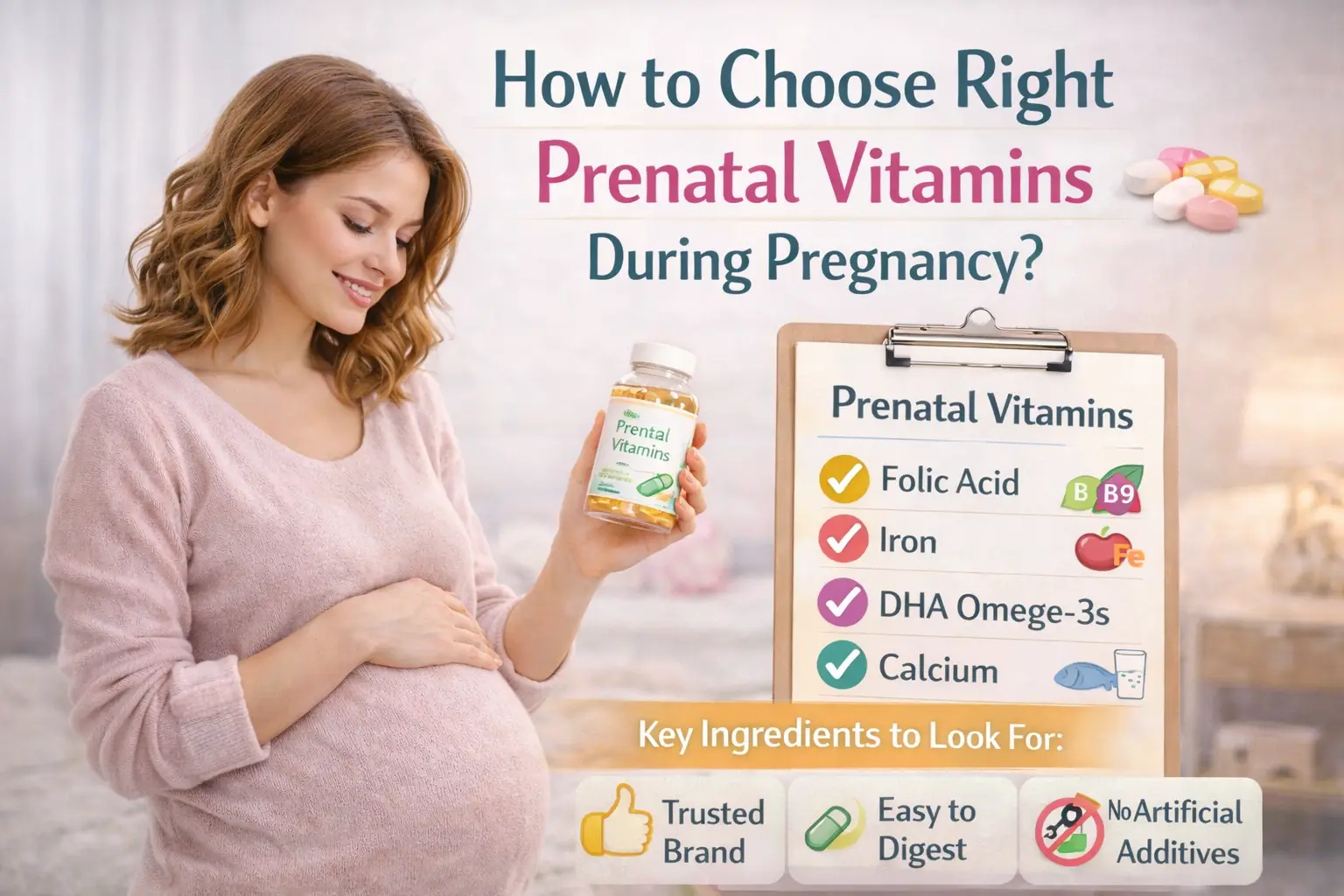
How to Choose Right Prenatal Vitamins During Pregnancy?
If you’re planning to get pregnant or you’ve just seen a positive test one of the first questions that may come to mind is: Am I taking the right prenatal vitamin?
Prenatal vitamins are often recommended before and during pregnancy because they help support the increased nutritional demands of your body. Even with a balanced diet, it can be difficult to get all the nutrients needed during this important time. That’s where a thoughtfully chosen prenatal vitamin can help fill in the gaps.
But choosing one isn’t always simple. Walk into any pharmacy or search online, and you’ll find shelves filled with options tablets, gummies, capsules, organic blends, “premium” formulas. Marketing claims can be overwhelming, especially for first-time moms.
In this guide, we’ll break down how to choose right prenatal vitamins, why they matter, which nutrients are typically included, and how to evaluate your options confidently. The goal is not to overwhelm you but to help you feel informed, calm, and empowered as you prepare for pregnancy.
What Are Prenatal Vitamins and Why Do They Matter?
Prenatal vitamins are specially formulated supplements designed to support the nutritional needs of women before and during pregnancy. While regular multivitamins are made for general adult health, prenatal formulas are created with pregnancy in mind.
During pregnancy, your body works harder. It supports your own health while also helping your baby grow and develop. That means certain nutrients become especially important.
Prenatal vitamins typically contain a combination of vitamins and minerals that support early development, energy levels, and overall maternal wellbeing. They are not meant to replace healthy eating but to complement it.
Think of prenatal vitamins as nutritional insurance. They help ensure that if your diet varies from day to day which is completely normal you’re still supporting your body with key nutrients.
Key Nutrients to Look For
While formulas vary, most prenatal vitamins include several core nutrients. Understanding why they’re included can help you make a more confident choice.
Folate (or Folic Acid)
Folate is one of the most well-known prenatal nutrients. It plays an important role in early development, particularly during the first few weeks of pregnancy often before a woman even knows she’s pregnant.
That’s why many healthcare providers recommend starting a prenatal vitamin while trying to conceive. Folate supports early cell growth and development during a time when critical changes are happening.
You may see it listed as “folate” or “folic acid.” Both are common forms used in prenatal formulas.
Iron
Iron helps support healthy blood levels. During pregnancy, blood volume naturally increases, which can raise the body’s need for iron.
Including iron in a prenatal vitamin helps support this natural increase. Some women tolerate iron well, while others may notice digestive sensitivity. This is one reason it’s helpful to pay attention to how your body responds.
Calcium
Calcium is important for bone health for both you and your growing baby. While many people get calcium from foods like dairy products, leafy greens, or fortified foods, some prenatal vitamins include additional calcium for added support.
Vitamin D
Vitamin D works closely with calcium and plays a role in overall bone and immune health. Many adults are low in vitamin D, especially in areas with limited sunlight exposure.
Because of its importance in overall wellbeing, vitamin D is commonly included in prenatal formulas.
DHA (Omega-3 Fatty Acids)
Some prenatal vitamins include DHA, a type of omega-3 fatty acid. DHA supports early brain and eye development.
Not all prenatal vitamins contain DHA, and some women choose to take it separately. Whether included in one formula or taken separately, it’s a nutrient often considered during pregnancy planning.
Iodine and Other Trace Minerals
Iodine and other trace minerals are often included in smaller amounts to support overall balance and development. While they may not be as widely discussed as folate or iron, they play supportive roles in the body.
The key takeaway is this: prenatal vitamins are designed to provide a broad range of nutrients that work together, not just one “super” ingredient.
Factors to Consider When Choosing a Prenatal Vitamin
Once you understand what’s inside, the next step is choosing a format and formula that works for you.
Tablet vs. Capsule vs. Gummy
Prenatal vitamins come in several forms. Tablets and capsules are common and often contain a full range of nutrients. Gummies may feel easier to take, especially if you struggle with nausea or dislike swallowing pills.
However, gummies sometimes contain fewer nutrients or lack iron, so it’s important to read the label carefully.
The “best” form is the one you can take consistently. If swallowing pills is difficult, choosing a format you’ll stick with matters more than perfection.
Tolerance and Digestive Comfort
Early pregnancy can bring nausea and digestive sensitivity. Some prenatal vitamins may feel heavy on the stomach.
If you notice discomfort, taking your vitamin with food or at a different time of day may help. In some cases, trying a different form can make a difference.
Listening to your body is important. A prenatal vitamin should support you not make you miserable.
Third-Party Testing and Quality Standards
Because supplements are widely available in the United States, quality can vary. Look for prenatal vitamins that mention third-party testing or quality verification on the label.
This helps provide reassurance that what’s listed on the bottle matches what’s inside.
Pre-Pregnancy vs. During Pregnancy Needs
Many prenatal vitamins are suitable for both pre-pregnancy and pregnancy. Starting before conception can be beneficial because early development begins quickly.
If you’re already pregnant, it’s still helpful to begin as soon as possible and discuss your options with a healthcare provider.
Common Mistakes to Avoid
With so many options available, it’s easy to fall into common traps.
Choosing Based Only on Marketing
Words like “natural,” “clean,” or “premium” can sound reassuring but they don’t always reflect the actual nutrient profile.
Instead of focusing on branding, turn the bottle around and review the ingredient list.
Ignoring the Label
Take a few moments to read what’s included. Make sure the prenatal vitamin contains core nutrients commonly associated with pregnancy support.
Assuming More Is Always Better
Higher amounts don’t necessarily mean better outcomes. Prenatal vitamins are carefully formulated to provide balanced support. More isn’t always safer or more effective.
Skipping Professional Consultation
While many prenatal vitamins are available over the counter, discussing your choice with a healthcare provider can help personalize your plan. Every woman’s health history and nutritional needs are unique.
Helpful Tips for Safe Prenatal Planning
Start your prenatal vitamin before trying to conceive if possible. Early nutritional support matters, especially in the first weeks.
Pair your prenatal vitamins with balanced meals. Whole foods like fruits, vegetables, lean proteins, whole grains, and healthy fats provide additional nutrients and fiber.
Stay hydrated and maintain regular meals to help with digestion and overall comfort.
Most importantly, bring your prenatal vitamin to your healthcare appointments so you can review it together. This creates space for informed, confident decisions rather than guesswork.
FAQ’s Choose Right Prenatal Vitamins During Pregnancy
Conclusion
Choosing the right prenatal vitamin doesn’t have to feel overwhelming. At its core, it’s about understanding what prenatal vitamins are designed to support your body during one of its most important seasons.
Focus on key nutrients, read labels carefully, consider what your body tolerates well, and involve your healthcare provider in the conversation. Avoid being swayed by marketing alone, and remember that consistency matters more than perfection.
You don’t need the most expensive option or the trendiest label. You need a prenatal vitamin that supports your body, fits your routine, and helps you feel confident moving forward.
Pregnancy preparation is a journey, and informed, thoughtful choices are a powerful first step. Taking time to explore 10 Things You Should Know at 4 Weeks Pregnant can give you clarity and reassurance as you begin this new chapter with confidence.