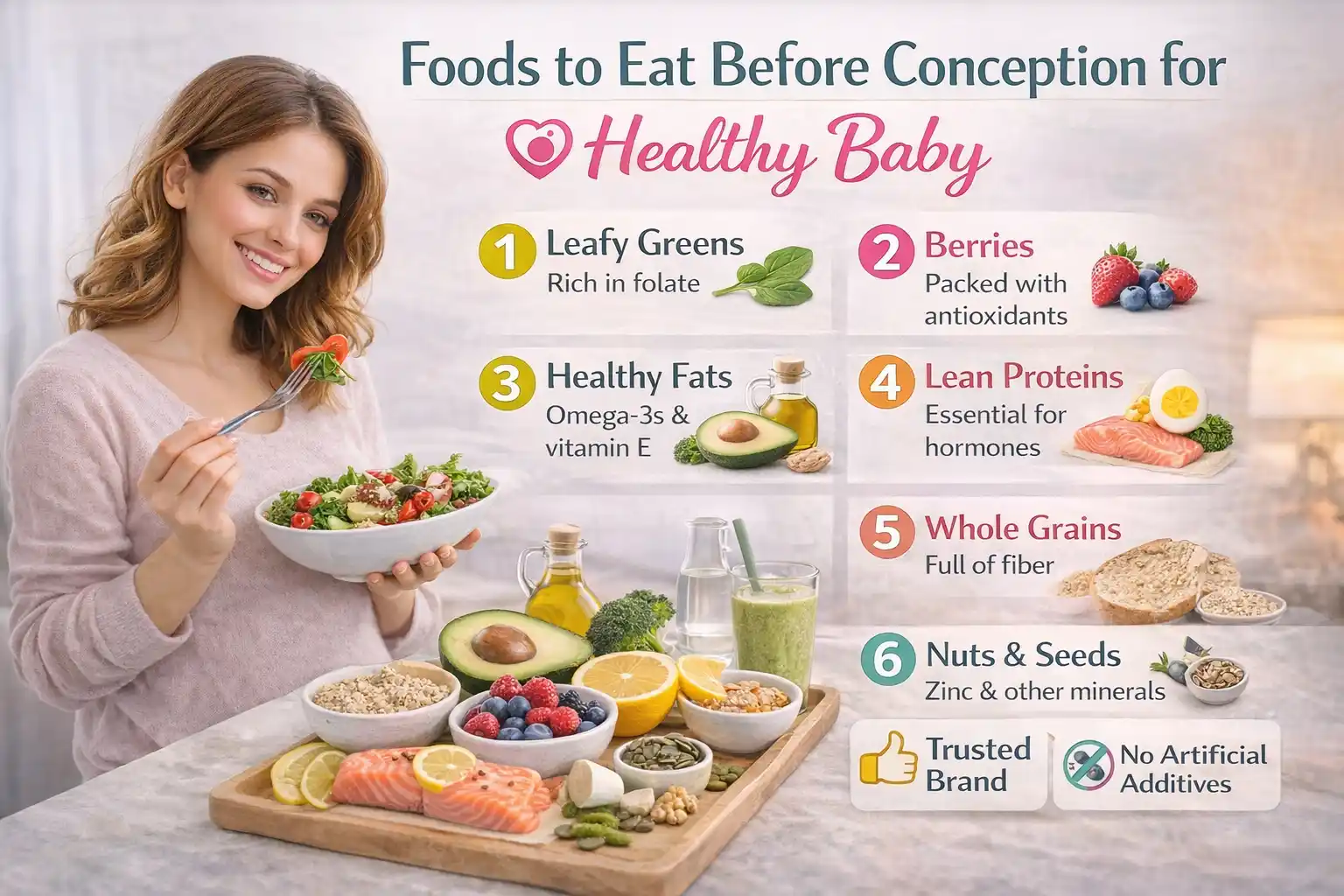
Foods to Eat Before Conception for Healthy Baby
When you’re planning to grow your family, it’s natural to focus on what happens after you see a positive pregnancy test. But the truth is, preparation often begins long before that moment. What you eat in the months leading up to conception can help create a strong, supportive foundation for your body and for a future pregnancy.
Many women wonder: Am I eating the right foods? Do I need to change everything? Is there a special fertility diet I should follow? The good news is that preparing nutritionally for pregnancy doesn’t require extreme rules or complicated meal plans. It starts with balanced, nourishing choices made consistently over time.
In this guide, you’ll learn the foods to eat before conception, which nutrients to focus on, the best foods to include in your routine, and how to build sustainable eating habits that support your body before pregnancy.
Why Pre-Conception Nutrition Is Important
Before pregnancy even begins, your body is already preparing. Hormones regulate your cycle, your body builds and releases eggs, and systems work together to maintain balance. These processes depend on overall health and nutrition plays a key role.
Think of pre-conception nutrition as preparing the soil before planting a garden. When your body feels nourished, rested, and supported, it’s better positioned for the changes pregnancy brings.
Healthy eating habits before conception can support steady energy levels, balanced blood sugar, and overall reproductive wellness. It’s not about perfection or achieving a specific weight. It’s about creating stability and nourishment so your body feels safe and supported.
Early pregnancy development happens quickly, often before a woman even realizes she’s pregnant. That’s one reason why nutrition before conception matters so much. Establishing balanced habits now can help you feel confident and prepared later.
Key Nutrients to Focus on Before Conception
Rather than focusing on a single “superfood,” it’s helpful to understand key nutrient categories and how they support overall wellness.
Folate-Rich Foods
Folate is a B vitamin naturally found in many plant-based foods. It supports early cell growth and development, which makes it especially important before and during early pregnancy.
Foods naturally rich in folate include leafy greens, beans, lentils, and citrus fruits. Incorporating these foods regularly can help support your body’s nutritional foundation.
Iron-Rich Foods
Iron supports healthy blood levels and energy. Many women of reproductive age benefit from being mindful of iron intake, especially if they experience heavy periods.
Iron-rich foods include lean meats, beans, lentils, spinach, and fortified grains. Pairing plant-based iron sources with vitamin C-rich foods, like bell peppers or oranges, can help with absorption.
Quality Protein Sources
Protein supports tissue repair, hormone balance, and overall energy. Before conception, consistent protein intake helps stabilize blood sugar and supports the body’s natural rhythms.
Sources include eggs, poultry, fish, beans, lentils, tofu, Greek yogurt, and nuts. Including protein at each meal can help you feel satisfied and energized throughout the day.
Healthy Fats
Healthy fats play a role in hormone balance and overall wellness. They also help your body absorb certain vitamins.
Avocados, olive oil, nuts, seeds, and fatty fish are examples of nourishing fat sources. Including small amounts regularly can support balance without overcomplicating your meals.
Fiber and Whole Grains
Fiber supports digestion and helps maintain stable blood sugar levels. Whole grains like quinoa, brown rice, oats, and whole wheat bread provide both fiber and additional nutrients.
Balanced digestion contributes to overall wellbeing, which supports your body as it prepares for pregnancy.
Best Foods to Eat Before Conception
Rather than focusing on individual nutrients alone, let’s look at food groups that naturally contain them and how you can incorporate them into everyday meals.
Leafy Greens and Colorful Vegetables
Spinach, kale, arugula, broccoli, carrots, sweet potatoes, and bell peppers are packed with vitamins, minerals, and antioxidants.
These vegetables support overall wellness and provide nutrients like folate, iron, and fiber.
Simple meal idea: Add sautéed spinach and mushrooms to scrambled eggs, toss roasted vegetables into grain bowls, or blend a handful of greens into a smoothie.
Whole Grains
Whole grains offer steady energy and fiber, helping you avoid energy crashes.
Examples include oatmeal, brown rice, whole grain pasta, quinoa, and whole wheat bread.
Simple meal idea: Start your day with oatmeal topped with berries and nuts, or build a lunch bowl with quinoa, roasted vegetables, and grilled chicken.
Lean Proteins
Lean protein sources support hormone balance and sustained energy.
Examples include chicken, turkey, eggs, beans, lentils, tofu, and fish.
Simple meal idea: Prepare grilled salmon with roasted vegetables, or enjoy a lentil soup with whole grain toast for a plant-based option.
Fruits
Fruits provide natural sweetness along with fiber and antioxidants.
Berries, oranges, apples, bananas, and avocados are easy to incorporate.
Simple meal idea: Add berries to yogurt, slice apples with nut butter for a snack, or blend fruit into a smoothie.
Dairy and Dairy Alternatives
Milk, yogurt, cheese, and fortified plant-based alternatives provide calcium and protein.
Simple meal idea: Add Greek yogurt to breakfast bowls, or use fortified almond milk in smoothies.
Nuts and Seeds
Almonds, walnuts, chia seeds, flaxseeds, and pumpkin seeds contain healthy fats and plant-based protein.
Simple meal idea: Sprinkle chia seeds into oatmeal or add a handful of almonds as an afternoon snack.
Foods and Habits to Be Mindful Of
Preparing for pregnancy doesn’t require strict rules, but being mindful of certain habits can help create balance.
Highly processed foods and excessive added sugars can contribute to energy spikes and crashes. That doesn’t mean you can’t enjoy treats, it simply means aiming for moderation.
Caffeine is another area where balance matters. Many women choose to be mindful of intake while trying to conceive, focusing on moderation rather than elimination.
Instead of labeling foods as “good” or “bad,” think in terms of frequency. Nourishing foods most of the time, with room for flexibility, creates a sustainable routine.
Practical Tips for Building a Pre-Pregnancy Meal Routine
Start by planning simple, balanced meals rather than elaborate recipes. A helpful approach is building your plate with:
- Half vegetables and fruits
- One-quarter protein
- One-quarter whole grains
- A small portion of healthy fats
When grocery shopping, focus on the outer aisles where fresh produce, dairy, and proteins are typically located. Stock your kitchen with staples like eggs, leafy greens, whole grains, beans, and frozen vegetables for easy meal assembly.
Meal prepping doesn’t have to mean hours in the kitchen. Washing and chopping vegetables ahead of time or cooking a batch of quinoa for the week can make healthy choices easier.
Most importantly, aim for consistency. Small, steady habits matter more than occasional “perfect” weeks.
Frequently Asked Questions
Conclusion
Preparing your body for pregnancy begins with simple, nourishing choices made consistently over time. Foods rich in folate, iron, protein, healthy fats, and fiber help support overall wellness and create a balanced foundation.
You don’t need a perfect diet or strict rules. You need steady, sustainable habits that make you feel energized and supported. Focus on variety, whole foods, and mindful balance rather than extremes.
This season of preparation is about confidence, not pressure. By nourishing your body now, you’re building a strong foundation for the journey ahead one thoughtful meal at a time.
As part of that foundation, understanding How to Choose Right Prenatal Vitamins During Pregnancy can help ensure you’re giving your body the essential nutrients it needs to support a healthy start.