
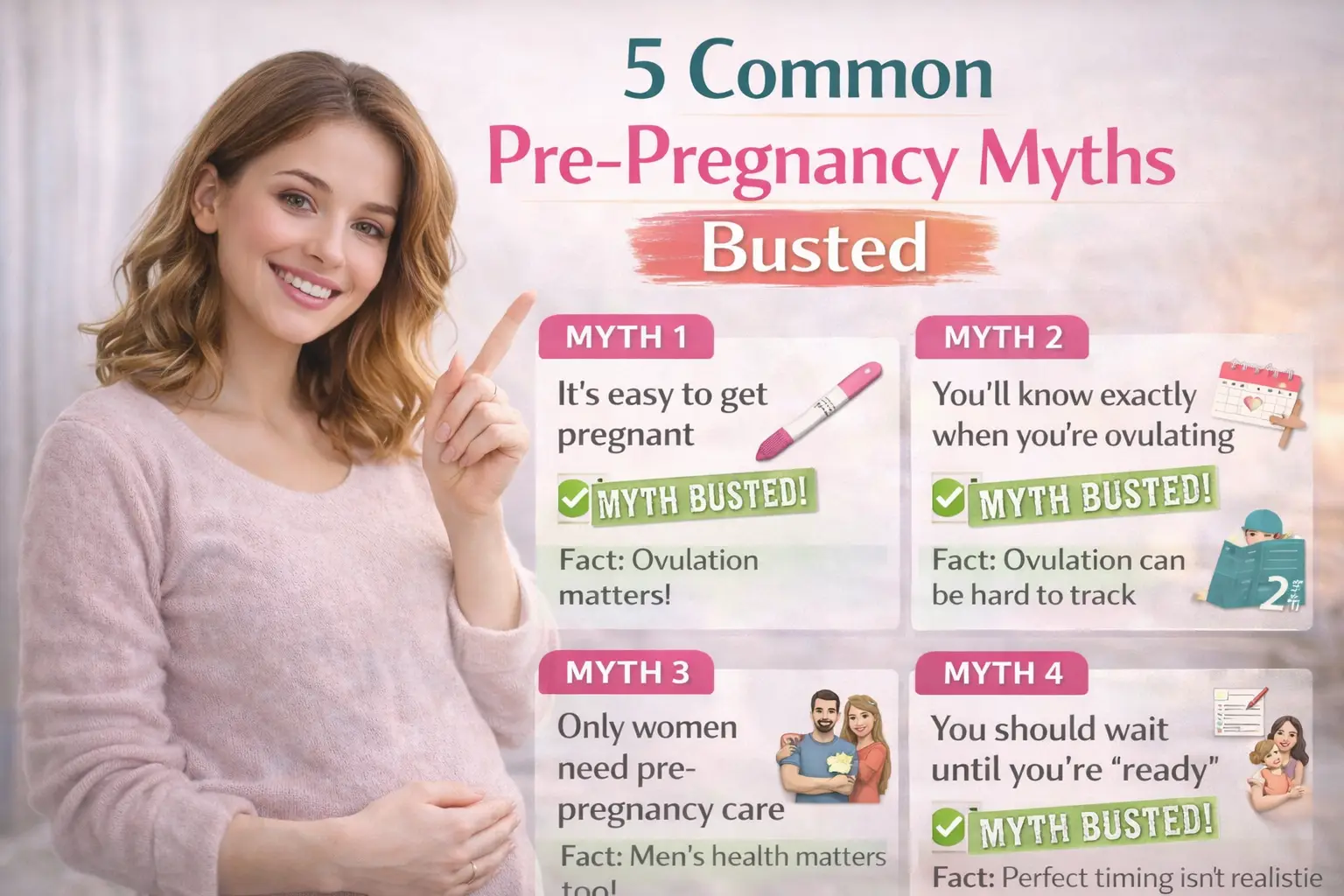
5 Common Pre-Pregnancy Myths Busted
When you start thinking about pregnancy, advice seems to come from everywhere: friends, family, social media, blogs, even strangers at the grocery store. Some of it is helpful. Some of it is outdated. And some of it is simply untrue.
Pre-pregnancy myths are common because conception feels mysterious and deeply personal. When something matters this much, people tend to share what they’ve heard or experienced, even if it’s not universally accurate. For women planning pregnancy or couples trying to conceive, this flood of information can feel overwhelming.
You may wonder: Do I need to change everything about my lifestyle? Am I already too late? Is there a secret formula I’m missing?
In this article, we’ll gently clear up five of the most common pre-pregnancy myths. You’ll gain realistic, balanced insight so you can prepare for pregnancy with confidence instead of confusion.
Why Clearing Pre-Pregnancy Myths Matters
Misinformation doesn’t just create confusion it can increase stress. And stress, especially during a season that should feel hopeful, can take an emotional toll.
When myths go unchallenged, women may feel unnecessary pressure to follow rigid rules, chase extreme diets, or compare themselves to others. Some may even delay trying to conceive because they feel “not ready enough.”
Clearing up common misconceptions allows you to focus on what truly matters: balanced health, emotional readiness, and thoughtful preparation. Pregnancy is not about perfection. It’s about building a supportive foundation for your body and mind.
Let’s take a closer look at some of the most common myths and what’s more realistic.
Myth #1: “You Have to Be Perfectly Healthy Before Trying to Conceive”
Why People Believe It
Many women are told they must reach an ideal weight, follow a flawless diet, exercise daily, and eliminate every unhealthy habit before even thinking about pregnancy. Social media often reinforces the idea that you need to “optimize” every detail first.
This belief can make pregnancy feel like a test you have to pass.
What’s More Realistic
While improving your health before conception is beneficial, you do not need to achieve perfection. Most women begin pregnancy with room for improvement somewhere in their routine and that’s normal.
Balanced nutrition, moderate movement, and stress awareness are helpful, but they don’t need to be extreme. Pregnancy preparation is about steady habits, not flawless execution.
Gentle Reassurance
Your body is resilient. Small, consistent improvements matter more than dramatic overhauls.
Practical Takeaway
Focus on gradual changes: add more whole foods, prioritize sleep, and reduce stress where possible. You don’t need to wait for “perfect” to begin trying.
Myth #2: “If You Don’t Get Pregnant Right Away, Something Is Wrong”
Why People Believe It
Stories of couples conceiving quickly can create unrealistic expectations. Movies and social media often portray pregnancy as immediate once you decide you’re ready.
When it doesn’t happen in the first month or two, anxiety can build quickly.
What’s More Realistic
Conception timing varies widely. Even healthy couples may take several months to conceive. Many factors influence timing, including age, cycle regularity, and simple biology.
Not getting pregnant immediately does not automatically signal a problem.
Gentle Reassurance
Patience during this phase is challenging but common. Many couples experience a waiting period.
Practical Takeaway
Track your cycle gently if helpful, focus on overall wellness, and avoid jumping to conclusions too early. Give your body time.
Myth #3: “There’s a Special Fertility Diet That Guarantees Pregnancy”
Why People Believe It
Online searches often lead to articles promoting “miracle foods” or rigid fertility meal plans. It’s tempting to believe that eating specific superfoods can dramatically increase your chances.
When something feels uncertain, simple solutions are comforting.
What’s More Realistic
While nutrition plays an important role in overall reproductive health, no single food or diet can guarantee pregnancy. Fertility is influenced by many factors beyond what’s on your plate.
A balanced, varied diet that includes fruits, vegetables, whole grains, lean proteins, and healthy fats supports general wellness. Extreme restriction or obsessive food rules can add unnecessary stress.
Gentle Reassurance
You don’t need a complicated diet. Consistency and balance are more important than chasing trends.
Practical Takeaway
Build meals around whole foods most of the time, allow flexibility, and avoid extreme dietary changes unless advised by a professional.
Myth #4: “You Should Stop Exercising When Trying to Conceive”
Why People Believe It
Some women fear that movement could “interfere” with conception. Others hear conflicting advice about exercise intensity and fertility.
The uncertainty can lead to avoiding activity altogether.
What’s More Realistic
Moderate, consistent movement supports overall health and can help manage stress. For most women, continuing familiar exercise routines is perfectly reasonable while trying to conceive.
The key is balance. Excessive, high-intensity training combined with inadequate nutrition may disrupt cycles in some cases but this is not the same as regular, moderate exercise.
Gentle Reassurance
Your body benefits from movement. You don’t need to become sedentary to prepare for pregnancy.
Practical Takeaway
Choose activities you enjoy walking, yoga, strength training, cycling and avoid drastic changes unless necessary.
Myth #5: “You Have to Eliminate All Stress Before Getting Pregnant”
Why People Believe It
Stress is often blamed for everything from missed periods to delayed conception. While chronic stress can affect overall wellbeing, the idea that you must be completely stress-free before conceiving is unrealistic.
Life rarely pauses just because you’re trying to get pregnant.
What’s More Realistic
Some level of stress is normal. Work responsibilities, family dynamics, and everyday challenges don’t disappear.
The goal isn’t eliminating stress, it’s managing it in healthy ways. Gentle coping strategies, emotional support, and self-care routines can make a meaningful difference.
Gentle Reassurance
You don’t need a perfectly calm life to conceive. You need balance.
Practical Takeaway
Incorporate small stress-relief habits into your routine: short walks, journaling, quiet evenings, or open conversations with your partner.
Helpful Pre-Pregnancy Preparation Tips
Instead of focusing on myths, focus on foundational habits that support overall wellbeing.
Start with balanced nutrition. Aim for consistent meals that include protein, fiber, and healthy fats. Stay hydrated throughout the day.
Prioritize sleep. Aim for steady bedtime routines and adequate rest whenever possible.
Move your body regularly in ways that feel sustainable, not punishing.
Have open conversations with your partner about expectations, timing, and emotional readiness. Preparing together strengthens your foundation.
And most importantly, practice patience. Preparation is not a race.
FAQs About Pre-Pregnancy Myths
Conclusion
Pre-pregnancy myths can create unnecessary pressure during a season that should feel hopeful and empowering. You don’t need perfect health, instant results, extreme diets, or a stress-free life to begin this journey.
What you need is balance, awareness, and patience.
By focusing on steady habits and realistic expectations, you can approach pregnancy preparation with confidence instead of confusion. Trust your body, take small intentional steps, and remember preparing for pregnancy is not about perfection.
As you move forward, understanding First Trimester Do’s & Don’ts for Expecting Moms can provide gentle guidance and clarity during those important early weeks. It’s about thoughtful, compassionate care for yourself along the way.